Introducing solid foods is an exciting stage for many families. Alongside trying new tastes and textures, parents often begin wondering when babies should start using bowls, plates and cutlery of their own.
There is no exact age that applies to every child because development happens at different rates. Some babies quickly show interest in holding spoons and feeding themselves, while others prefer to take things more slowly. In most cases, introducing bowls, plates and cutlery gradually during the weaning process helps children become comfortable with independent eating over time.
Rather than expecting babies to immediately eat neatly and confidently, it can help to think of feeding accessories as tools that support learning and development.
When do babies usually begin self-feeding?
Most babies begin showing signs of interest in feeding themselves during the early stages of weaning.
Parents may notice behaviours such as:
- Reaching towards food
- Watching others eat
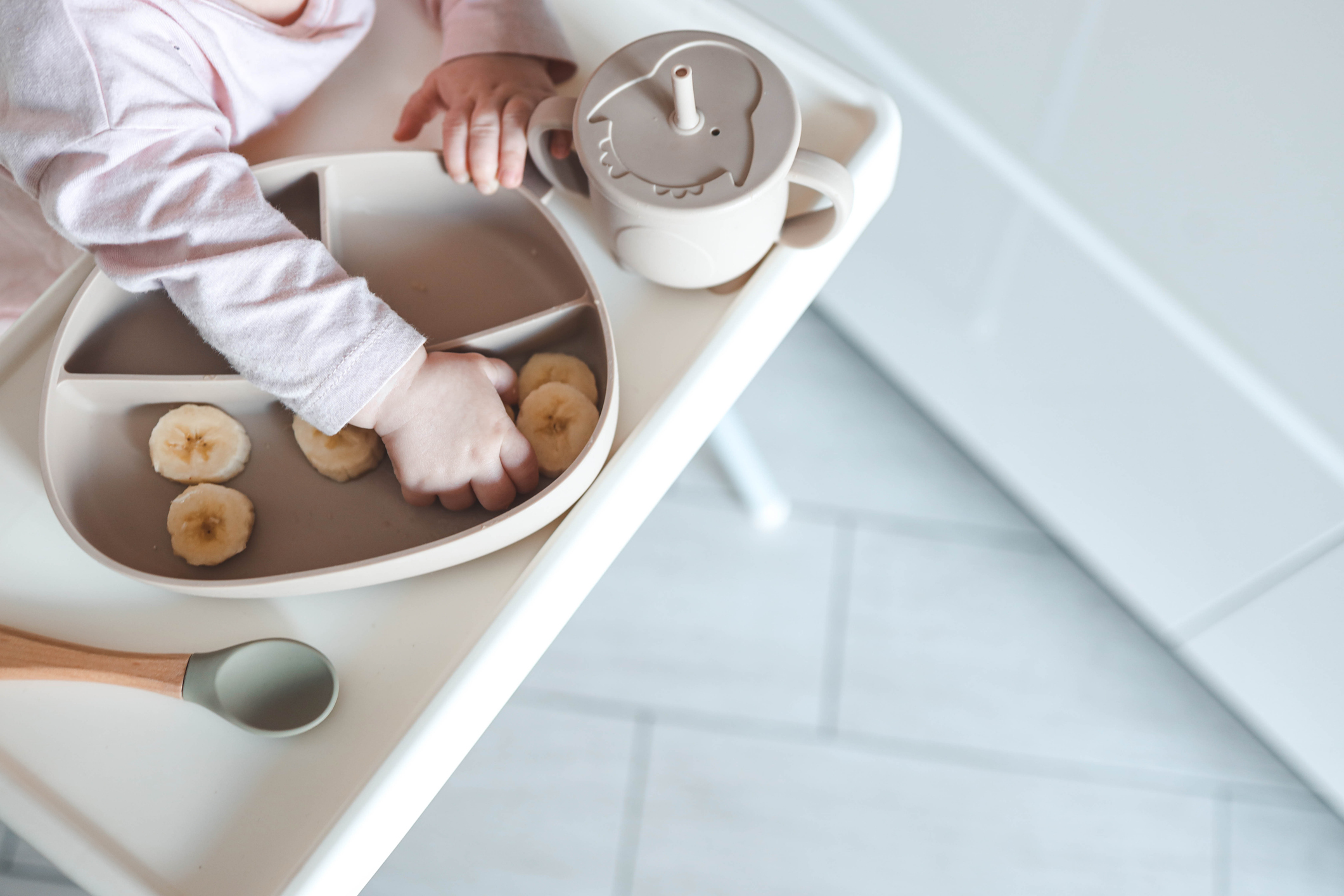
- Trying to grab spoons
- Picking up small pieces of food
- Attempting to hold feeding items
These signs often appear around the time babies begin exploring solid foods, although timing varies between children.
Early exploration is normal
Many parents imagine self-feeding means babies immediately using spoons correctly and eating independently.
The reality often looks quite different.
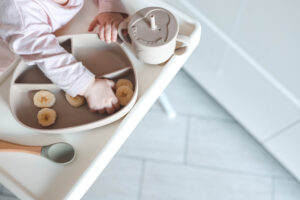
Initially, babies may:
- Hold spoons upside down
- Bang cutlery on trays
- Drop bowls repeatedly
- Put feeding items into their mouths for exploration
This behaviour is completely normal.
Young children learn through touch and repetition, so early experiences are often more about exploration than eating neatly.
Why are bowls, plates and cutlery important during weaning?
Feeding accessories do much more than simply hold food.
During weaning, they help babies gradually develop important skills that support independence and physical development.
Building coordination
Using bowls, plates and cutlery can help children practise:
- Hand movements
- Gripping skills
- Hand-to-mouth coordination
- Balance
- Precision
Even simple actions such as attempting to scoop food help strengthen movement patterns.
Encouraging independence
Babies often enjoy copying what they see adults doing.
Providing their own feeding products can help children feel involved during mealtimes.
This may encourage:
- Curiosity around food
- Confidence
- Participation
- Positive mealtime experiences
Children often become more interested when they feel included rather than simply being fed.
How can parents introduce feeding accessories gradually?
Introducing everything at once can sometimes become overwhelming.
A gradual approach often feels easier for both parents and children.
Start with simple items
Parents may begin with:
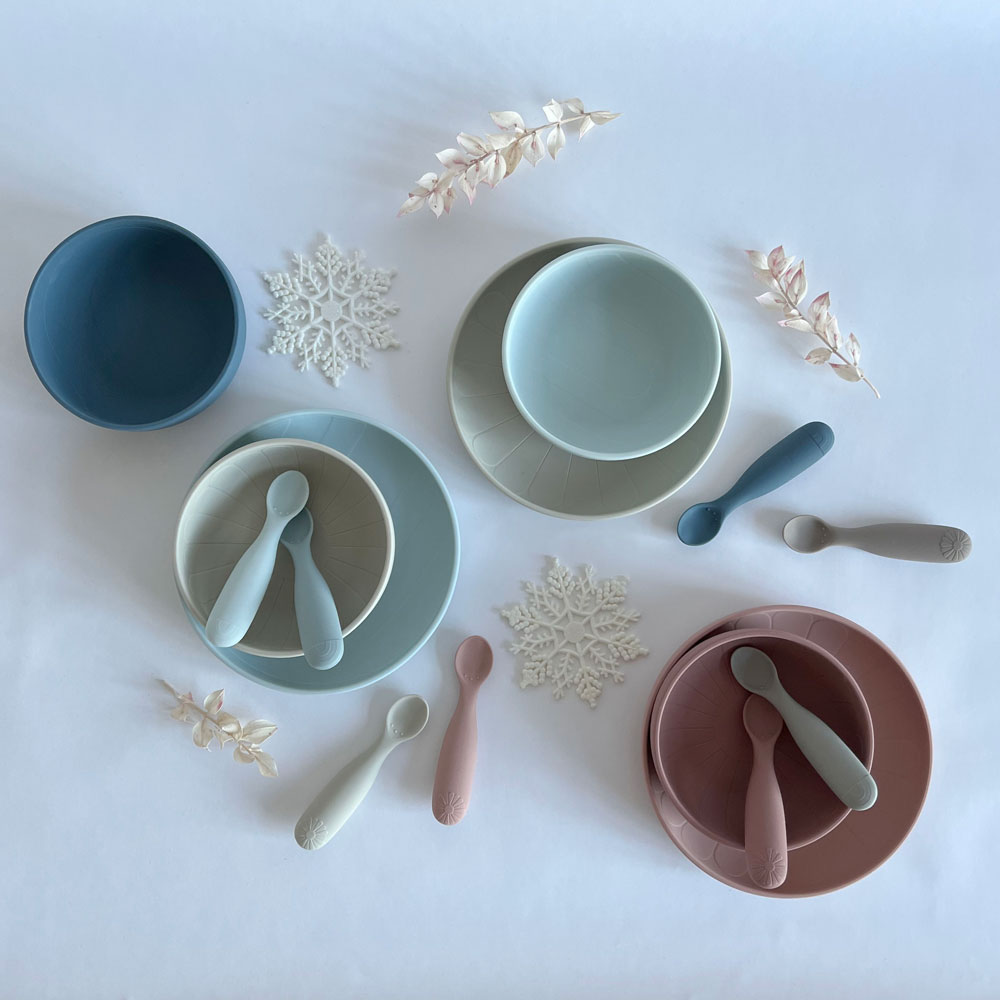
- Soft spoons
- Lightweight bowls
- Small plates
- Easy-grip handles
Simple products often allow babies to practise movements without creating frustration.
Allow babies to explore
Parents sometimes worry when feeding products become toys rather than eating tools.
For example, babies may:
- Wave spoons around
- Tap bowls
- Throw items
- Chew handles
Although messy, these behaviours help children understand shape, weight and movement.
Continue using assisted feeding
Introducing self-feeding does not mean parents stop helping.
Many families naturally use a combination approach:
- Parent-led feeding
- Baby-led exploration
- Independent attempts
Over time babies gradually take a more active role.
What challenges should parents expect during early self-feeding?
Self-feeding can be exciting, but it can also become messy and unpredictable.
Parents often benefit from realistic expectations.
Mess is part of learning
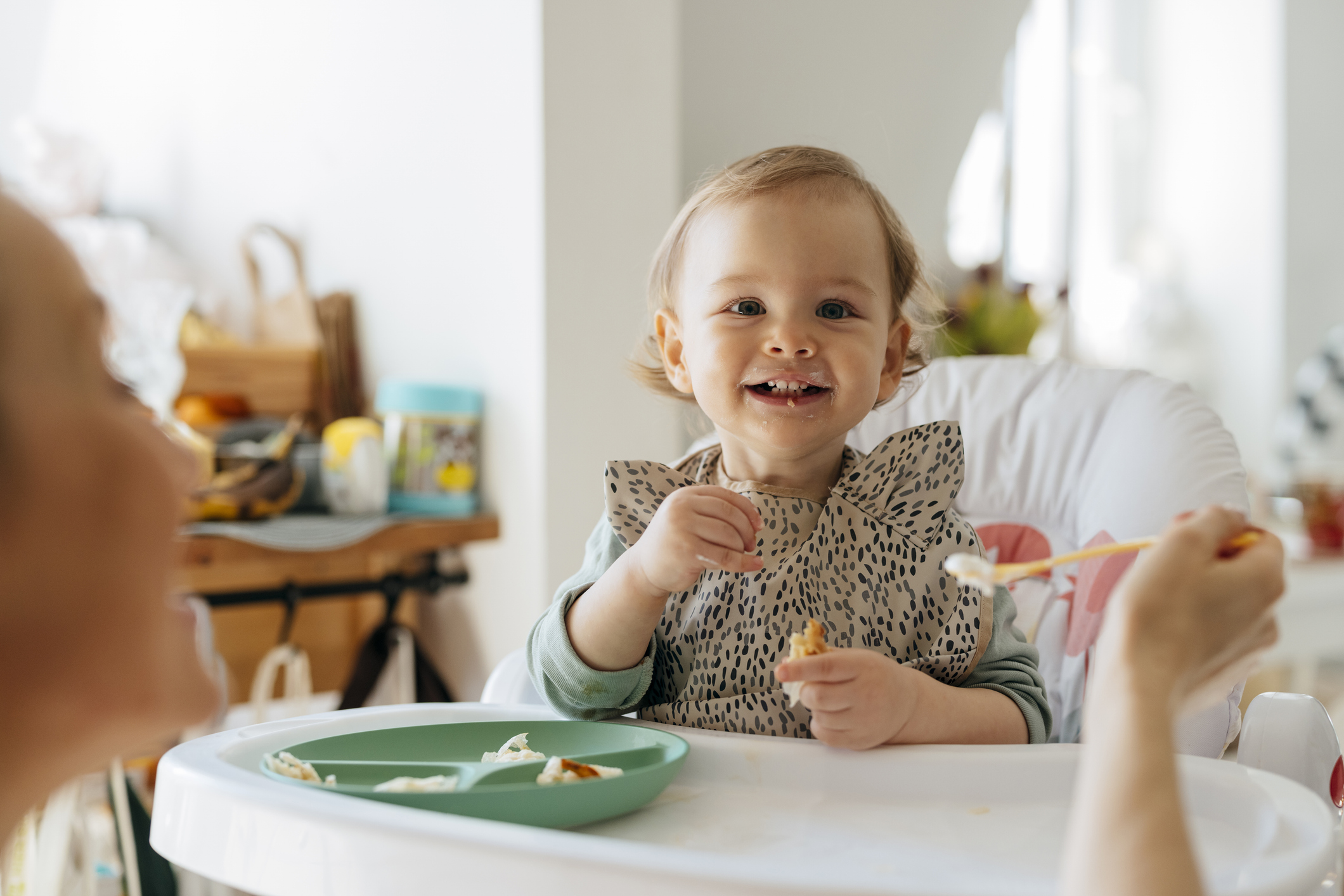
Food may end up:
- On clothes
- On the floor
- In hair
- On highchairs
- On nearby furniture
While this can sometimes feel frustrating, mess often forms part of sensory learning and skill development.
Children are discovering:
- Textures
- Movements
- Control
- Cause and effect
Progress is not always consistent
Babies frequently develop skills unevenly.
A child who uses a spoon confidently one day may suddenly refuse it the next.
This is generally normal.
Learning happens gradually and often includes periods of experimentation and changing preferences.
Patience helps
Parents sometimes worry that children are falling behind if they do not immediately master self-feeding.
Most children develop confidence over time through repeated opportunities and encouragement.
What should parents look for when choosing feeding products?
There are many feeding products available, which can make choosing feel slightly overwhelming.
Practical considerations can often simplify the decision.
Comfort and ease of use
Babies are still developing hand strength and coordination.
Products that feel easier to hold may encourage greater confidence.
Parents often look for:
- Easy-grip shapes
- Lightweight designs
- Smooth edges
- Comfortable handles
Durability for everyday use
Feeding products usually experience heavy use.
Bowls and cutlery often get:
- Dropped
- Thrown
- Washed repeatedly
- Packed into changing bags
Choosing practical products suitable for regular use can help reduce replacement needs.
Suitable sizing
Very large cutlery or deep bowls may feel awkward for younger babies.
Smaller designs often support easier handling during early learning stages.
How feeding skills change over time
Children’s mealtime abilities gradually evolve throughout early childhood.
Early weaning stage
At this stage babies are often:
- Exploring food
- Watching others eat
- Holding objects
- Developing coordination
Older babies
As confidence grows, children often begin:
- Picking up foods independently
- Holding spoons
- Attempting scooping movements
- Showing food preferences
Toddler stage
Toddlers usually become more involved in mealtimes and may want greater independence.
Parents may notice:
- Improved coordination
- Better control
- More confident eating
- Greater curiosity
Although occasional messes rarely disappear entirely.
Everyday examples of introducing feeding products
Scenario one: First spoon experiences
A parent offers a soft spoon while continuing to assist with feeding.
The baby holds it, explores it and gradually begins understanding its purpose.
Scenario two: Family mealtimes
A baby sits with the family using their own bowl and plate.
Watching others eat encourages imitation and participation.
Scenario three: Building confidence
A toddler initially struggles to scoop food but gradually improves after repeated opportunities to practise.
Small experiences often build larger skills over time.
Frequently Asked Questions
At what age can babies start using spoons?
Many babies begin exploring spoons during early weaning, although effective use develops gradually.
Should babies use bowls straight away?
Parents can introduce bowls early, even if babies initially interact with them through play and exploration.
Is self-feeding important?
Self-feeding can support independence, coordination and confidence while helping children develop mealtime skills.
Why does my baby throw bowls and spoons?
Throwing objects forms part of learning and exploration for many babies. They are often testing movement and reactions rather than misbehaving.
When do toddlers usually use cutlery properly?
Development varies considerably, but coordination and control generally improve progressively during toddler years.
Introducing bowls, plates and cutlery is less about reaching a particular age and more about supporting development gradually. Feeding accessories can help children build confidence, practise important skills and become more involved in family mealtimes.
Although the process can sometimes feel messy and unpredictable, these small experiences often help create positive foundations for future eating habits and independence.
Phone: 0208 0497 882
Email: info@ninosdreams.co.uk
Find out more: Nino’s Dreams
Find us on Facebook