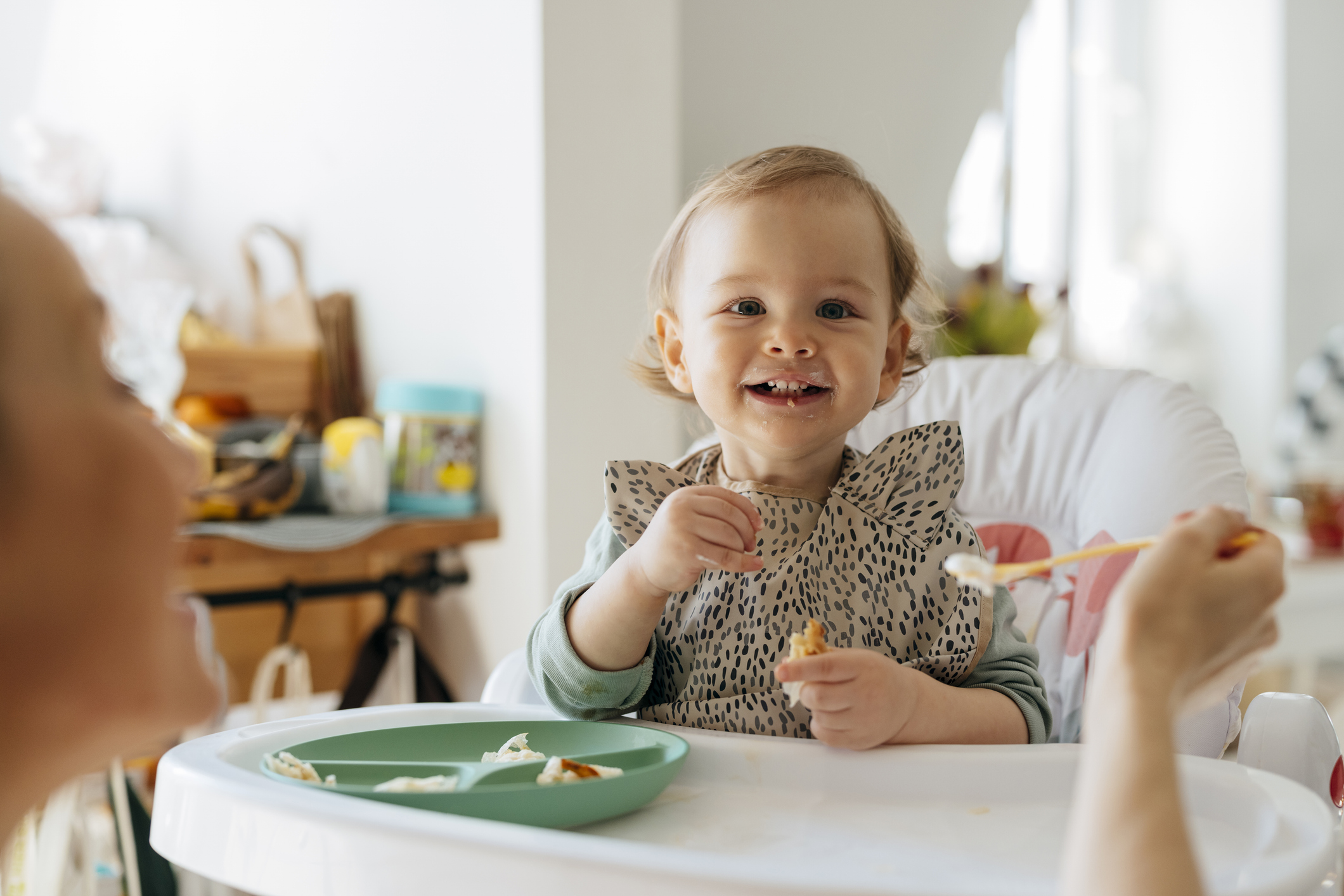
Few parenting experiences prepare you for the reality of weaning and early self-feeding. What starts as a carefully prepared meal can quickly end up on the floor, the highchair, the baby’s clothing and sometimes even the walls.
While a certain amount of mess is an unavoidable part of learning to eat independently, the right feeding products can help make mealtimes more manageable. They can reduce spills, simplify cleaning and allow babies to practise important skills without creating unnecessary stress for parents.
The goal is not to eliminate mess entirely. Mess is often part of how babies learn. Instead, practical feeding products can help keep mealtimes under control while supporting confidence and development.
Why are mealtimes so messy during weaning?
Babies are learning several new skills at once during weaning.
They are discovering:
- New tastes
- New textures
- How to hold food
- How to use their hands
- How to use spoons and cutlery
- How to coordinate movements
It is a lot to learn.
Exploration comes before neatness
Adults often view eating as a simple activity because they have spent years practising.
Babies approach food differently.
Many babies will:
- Squash food
- Throw food
- Drop food repeatedly
- Smear food across trays
- Explore food with their hands
Although this can be frustrating, it is often part of normal development.
Messy exploration helps babies understand texture, shape, temperature and movement.
Which feeding products help contain spills and dropped food?
Certain feeding products are designed to reduce the amount of food that escapes during meals.
Bibs
Bibs are among the most frequently used feeding accessories.
They help protect clothing from:
- Purees
- Sauces
- Drinks
- Dropped food
Parents often find that having several bibs available makes daily life easier, particularly during the early stages of weaning.
Bowls
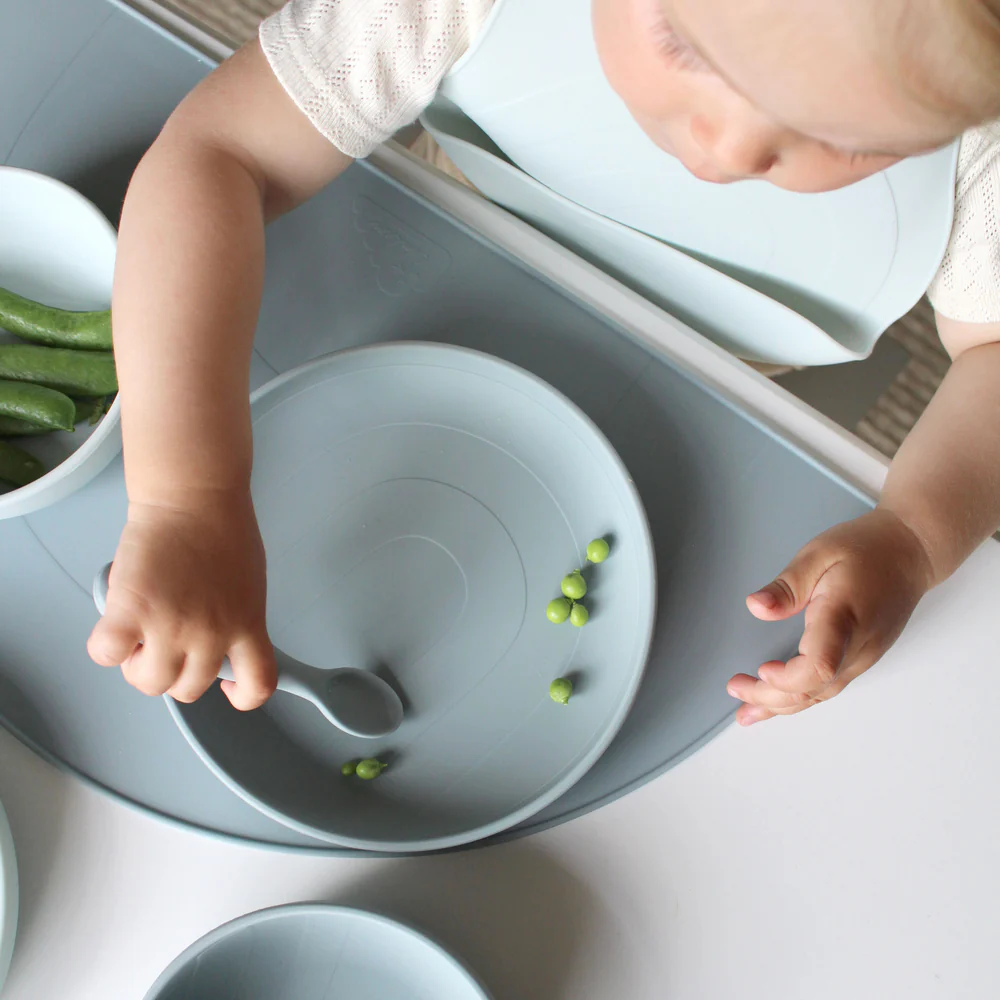
Baby bowls are designed to make serving food simpler while helping reduce spills.
Practical bowls can help:
- Keep portions organised
- Make food easier to access
- Support spoon practice
- Reduce accidental tipping
While no bowl can completely prevent mess, a suitable design can make meals more manageable.
Plates
As babies progress towards more independent eating, plates become increasingly useful.
Plates can help:
- Separate different foods
- Encourage self-feeding
- Create structure during meals
- Support food exploration
Simple, practical plates often work best during the learning stage.
Easy-to-use cutlery
Baby cutlery is designed to suit smaller hands and developing coordination.
The right cutlery can help babies:
- Practise gripping
- Develop hand control
- Build confidence
- Participate in family mealtimes
Self-feeding is often messy initially, but suitable cutlery can help children develop skills more comfortably.
How can feeding accessories encourage independent eating?
Many parents understandably focus on reducing mess, but feeding products also play an important role in helping babies learn.
Building confidence
Children often enjoy having their own bowls, plates and cutlery because it allows them to participate more actively.
This can encourage:
- Curiosity
- Confidence
- Independence
- Interest in food
Even if meals become messy, babies are learning valuable skills.
Supporting motor development
Using feeding products helps babies practise:
- Hand-eye coordination
- Gripping
- Scooping
- Reaching
- Precision movements
These skills continue developing throughout toddlerhood.
What practical habits help keep mealtimes under control?
Feeding products can help, but routines and preparation also make a difference.
Keep expectations realistic
Many parents find mealtimes less stressful when they accept that some mess is normal.
Trying to achieve perfectly tidy meals can lead to unnecessary frustration.
Prepare the area beforehand
Simple preparation can make cleaning easier later.
Parents often benefit from:
- Having wipes nearby
- Keeping spare bibs available
- Having cleaning cloths ready
- Preparing drinks in advance
Small steps can reduce disruption during meals.
Encourage practice
Children improve through repetition.
Allowing opportunities for self-feeding, even when it feels messy, helps develop confidence and ability over time.
What should parents consider when choosing feeding products?
With so many products available, choosing feeding accessories can feel overwhelming.
Practical considerations often help narrow options.
Ease of cleaning
Feeding products are used repeatedly throughout the week.
Parents frequently appreciate products that are:
- Easy to wipe clean
- Simple to wash
- Durable
- Suitable for regular use
Comfortable sizing
Products designed for babies should be appropriate for smaller hands and developing coordination.
Oversized cutlery or awkward bowls can make learning more difficult.
Everyday practicality
Parents may wish to ask:
- Will this be used regularly?
- Is it suitable for my child’s stage?
- Can it support self-feeding?
- Is it easy to store?
Practical products often become the most frequently used.
Everyday examples of reducing mealtime mess
Scenario one: Early weaning
A baby begins exploring soft foods using a bowl and bib.
Although some food still ends up on the floor, clothing remains cleaner and feeding feels more organised.
Scenario two: Spoon practice
A child starts learning to use cutlery independently.
Appropriately sized utensils help make movements easier and encourage continued practice.
Scenario three: Family mealtimes
Using bowls, plates and cutlery similar to the rest of the family helps the baby feel included while learning new skills.
Why some mess is actually beneficial
It may sound surprising, but completely mess-free feeding is not necessarily the goal.
Mess often means babies are:
- Exploring
- Learning
- Experimenting
- Developing coordination
- Building confidence
Parents frequently notice that the messiest stages are also periods of rapid learning.
Over time, children gradually become more controlled and confident with food.
The mess usually decreases as skills improve.
Frequently Asked Questions
Can feeding products completely eliminate mealtime mess?
No. Some mess is a normal part of learning to eat independently, although practical feeding products can help reduce it.
When should babies start using bowls and plates?
Many babies can begin exploring bowls and plates during the weaning process as they become more involved in feeding.
Does self-feeding always create mess?
Initially, yes. Most babies create some mess while developing feeding skills and coordination.
Are bibs still useful for older babies?
Yes. Many parents continue using bibs throughout weaning and toddler stages.
Why is self-feeding important?
Self-feeding can support independence, coordination, confidence and positive relationships with food.
Mealtime mess is a normal part of childhood, but practical feeding products can make it easier to manage. Bowls, plates, cutlery and bibs help support learning while reducing some of the challenges that come with weaning and self-feeding.
Rather than focusing on perfectly tidy meals, parents can use the right products to create a more relaxed environment where babies can learn, explore and build confidence around food.
Phone: 0208 0497 882
Email: info@ninosdreams.co.uk
Find out more: Nino’s Dreams
Find us on Facebook