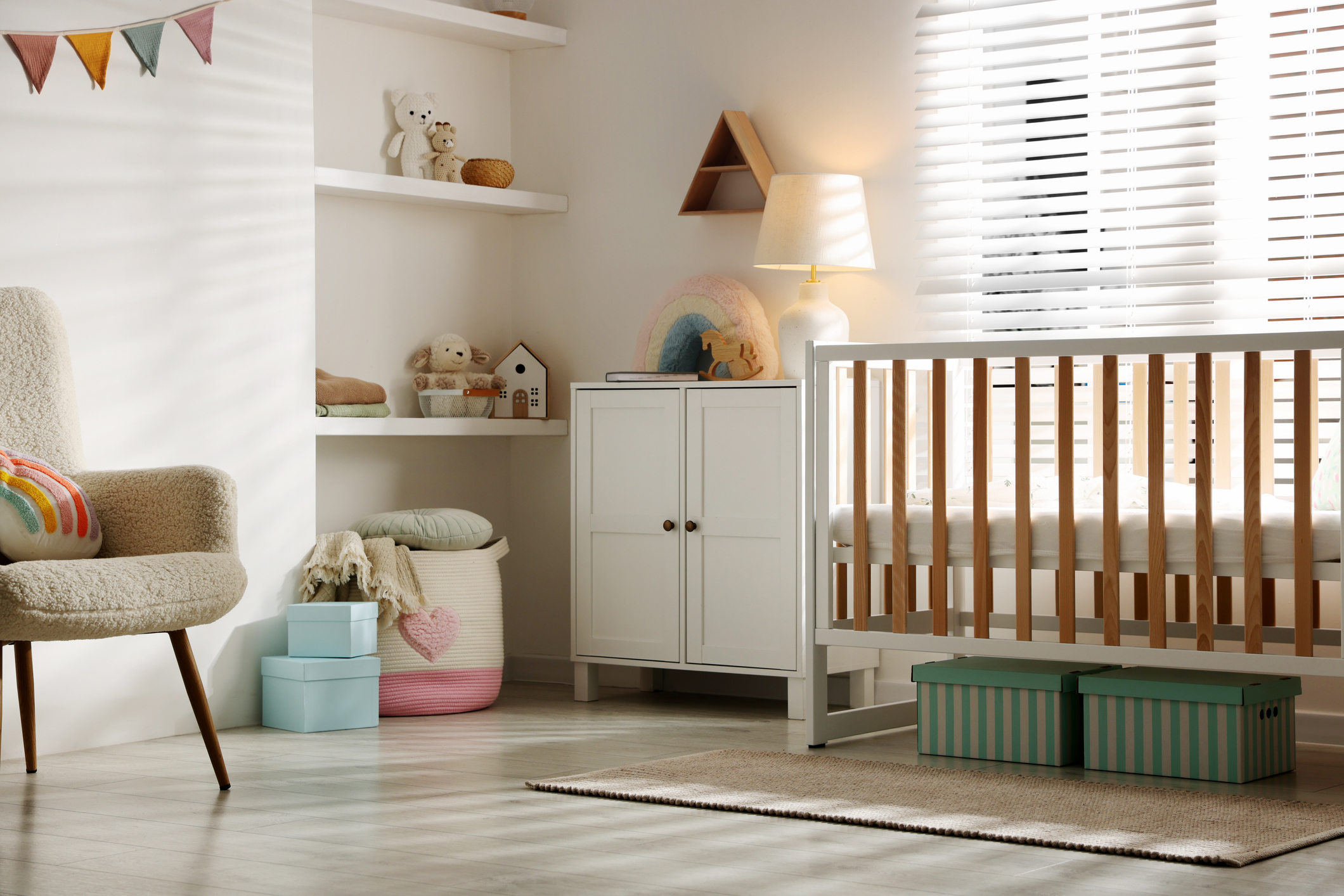
Designing a nursery is one of the most exciting parts of preparing for a baby, but it can also feel overwhelming. There are colours, furniture choices, storage ideas, accessories and safety considerations to think about. While style matters, the most successful nursery layouts are usually the ones that work well during everyday routines.
A practical nursery layout should make feeding, changing, sleeping, dressing and play easier. It does not need to be large or filled with products. What matters most is creating a space that feels calm, organised and easy to use, especially during tired mornings, late-night changes and busy family routines.
The best nursery layout supports both baby comfort and parent convenience.
What makes a nursery layout practical?
A practical nursery is one where everything has a clear purpose.
Rather than arranging the room purely around appearance, parents often benefit from thinking about how the space will actually be used.
Common nursery activities include:
- Changing nappies
- Dressing the baby
- Feeding
- Settling for sleep
- Storing clothing
- Keeping blankets and accessories nearby
- Creating space for play
When these activities are considered early, the layout becomes easier to plan.
Keep daily essentials close
Parents may need certain items several times a day.
These might include nappies, wipes, changing pads, blankets, muslins, clothing and comfort items.
Keeping frequently used products within easy reach can reduce stress and prevent unnecessary searching during busy moments.
How should parents organise sleep, changing and feeding areas?
Thinking in zones can make nursery planning much easier.
The room does not need to be large. Even a small nursery can work well if each area has a clear function.
Sleep area
The sleep area should feel calm, simple and uncluttered.
Parents often keep this section focused on rest rather than activity. Soft lighting, easy access to blankets and a peaceful atmosphere can help create a soothing environment.
It is also helpful to avoid placing too many stimulating toys close to the sleeping area, especially as babies become more aware of their surroundings.
Changing area
The changing area is one of the most practical parts of the nursery.
A good changing set-up should allow parents to access essential items quickly and safely.
Useful items nearby may include:
- Changing pads
- Nappies
- Wipes
- Spare clothing
- Muslins
- Storage baskets
- Nappy disposal items
The aim is to avoid needing to step away once a change has started.
Feeding and comfort area
Some parents create a small feeding or settling area within the nursery.
This does not need to be elaborate. A comfortable chair, nearby blanket and small storage basket can be enough to support feeding, cuddles or quiet moments.
This area can also be useful during night feeds or when parents want a calm space away from busier parts of the home.
What nursery products help with storage and comfort?
Nurseries often need to store a surprising number of small items.
Clothing, nappies, blankets, toys, bath products and changing accessories can quickly become disorganised without simple storage.
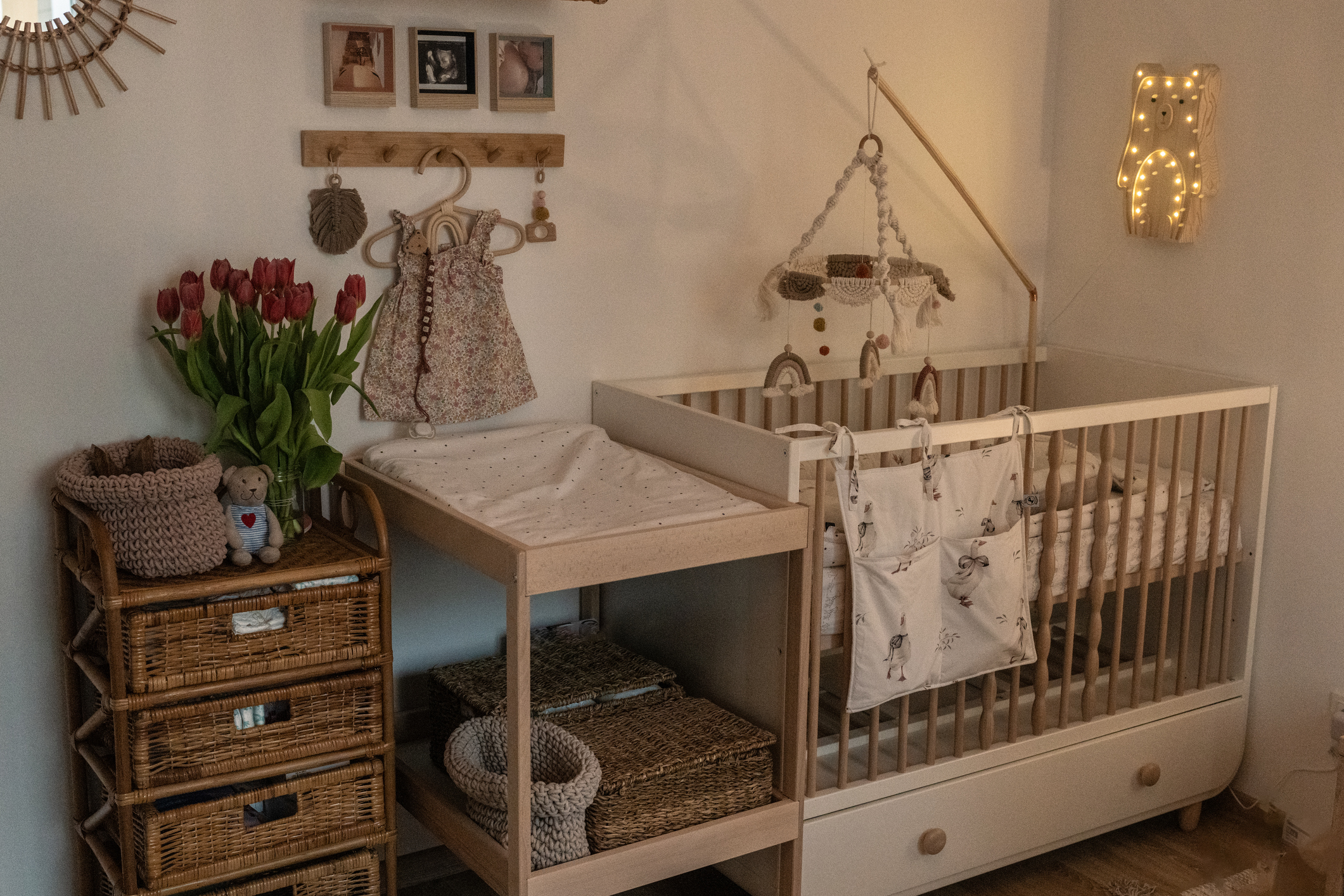
Baskets
Baskets are practical because they can group similar items together.
They may be used for:
- Blankets
- Toys
- Muslins
- Changing products
- Clothing
- Bath essentials
They are also flexible, which means they can move around the home as routines change.
Blankets and soft furnishings
Baby blankets can be useful in several areas of the nursery.
They may support:
- Feeding routines
- Quiet time
- Supervised floor time
- Pram preparation
- Comfort after bath time
Soft nursery accessories can help the room feel warm and welcoming while still serving practical purposes.
Playmats
Playmats can help create a dedicated space for supervised play and early development.
They provide a comfortable surface for tummy time, stretching, reaching and exploring toys.
How can a nursery layout support play and development?
A nursery is not only a sleeping space.
As babies grow, they begin spending more time exploring, moving and playing.
A practical layout should allow space for this development.
Leave floor space where possible
Even a small amount of clear floor space can be helpful.
Babies need room to:
- Stretch
- Roll
- Reach
- Practise tummy time
- Explore toys
- Begin crawling
Keeping play areas simple can make them easier to use every day.
Keep toys accessible but organised
Toys support learning and exploration, but too many items out at once can make the room feel cluttered.
Parents may find it helpful to rotate toys and keep only a small selection available.
This can help maintain interest while making tidying easier.
How can parents create a nursery that adapts as babies grow?
Babies grow quickly, and nursery needs change with them.
A layout that works for a newborn may need adjusting as the child becomes more active.
Newborn stage
During the newborn stage, parents often prioritise:
- Changing convenience
- Feeding comfort
- Easy clothing access
- Calm sleep routines
Older baby stage
As babies become more alert and mobile, the nursery may need more space for:
- Play
- Movement
- Toy storage
- Safer organisation
Items that were once within reach may need moving higher or storing differently.
Toddler stage
Toddlers often need more accessible storage and space for independent play.
Flexible products such as baskets, blankets and playmats can continue being useful as the room evolves.
Common nursery layout mistakes to avoid
Parents naturally want the nursery to look beautiful, but a few choices can make daily routines harder.
Prioritising style over access
A nursery may look lovely in photos but still be frustrating to use if everyday items are difficult to reach.
Practicality should guide the main layout first, with style added around it.
Overfilling the room
Too much furniture or too many accessories can make the space feel cramped.
Babies do not need everything at once.
Leaving breathing room can make the nursery calmer and easier to adapt.
Forgetting storage
Small baby items accumulate quickly.
Without storage, even a well-designed nursery can become cluttered within days.
Simple baskets and organised spaces often make a significant difference.
Everyday examples of practical nursery layouts
Scenario one: Small nursery
A parent uses baskets under furniture to store blankets, muslins and spare clothing.
The room stays tidy without needing lots of extra furniture.
Scenario two: Night-time care
Changing pads, nappies, wipes and sleepsuits are kept together.
During night changes, everything is ready and easy to reach.
Scenario three: Growing baby
A playmat is added to the floor as the baby becomes more active.
Toy baskets are placed nearby so playtime and tidying remain simple.
Frequently Asked Questions
What should every nursery include?
Most nurseries benefit from areas for sleeping, changing, clothing storage and supervised play, although the exact layout depends on space and family routines.
How do you organise a small nursery?
Use simple zones, keep essentials close to hand and choose flexible storage such as baskets to reduce clutter.
Should toys be kept in the nursery?
Yes, if space allows. Keeping a small selection of toys available can support play without overwhelming the room.
Are nursery baskets useful?
Baskets are useful for organising blankets, toys, changing products and other everyday baby accessories.
How can a nursery grow with a child?
Choose flexible storage, avoid overcrowding and leave space for play as babies become more mobile.
Creating a practical nursery layout is about making daily routines easier. A thoughtful arrangement can support feeding, changing, sleeping, storage and play without making the room feel cluttered or complicated.
By focusing on comfort, organisation and flexibility, parents can create a nursery that works well from the newborn stage and continues adapting as their child grows.
Phone: 0208 0497 882
Email: info@ninosdreams.co.uk
Find out more: Nino’s Dreams
Find us on Facebook