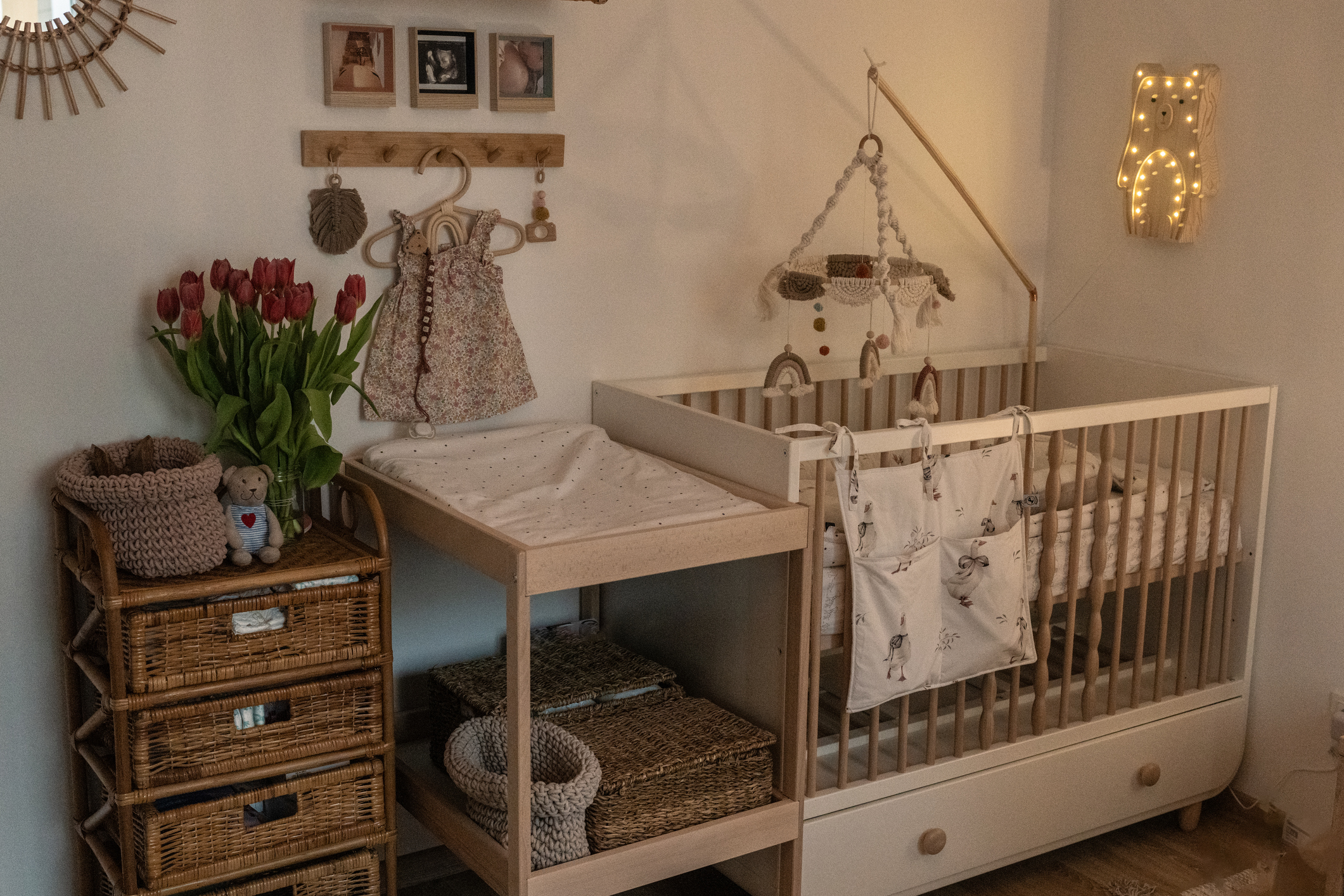
A well-organised changing station can make everyday baby care feel much easier. During the early months, nappy changes happen frequently, often when parents are tired, busy or trying to manage several things at once. Having everything in one clear place can save time, reduce stress and make changes feel more straightforward.
A changing station does not need to be complicated or overly styled. The most useful set-ups are practical, safe and easy to maintain. Whether parents use a dedicated changing table, a changing pad on a suitable surface or a portable basket system, the goal is the same: keep essential items close to hand while making the baby comfortable and secure.
Why is a changing station useful at home?
A changing station creates consistency.
Instead of searching for nappies, wipes, spare clothing or creams around the house, parents can keep commonly used items together. This helps create smoother routines and reduces the chance of forgetting something halfway through a change.
It supports quicker changes
Babies do not always wait patiently. A practical changing station allows parents to move through the process calmly and efficiently.
This can be especially useful:
- During night changes
- Before leaving the house
- After bath time
- During busy mornings
- When caring for more than one child
Small improvements in organisation can make a noticeable difference when repeated several times each day.
What essential items should be kept close by?
The exact contents will vary between families, but most changing stations include a few everyday essentials.
Nappies
Nappies are the most obvious item to keep nearby.
Many parents find it helpful to keep enough nappies for at least a day or two in the changing area, with extra stock stored elsewhere.
Wipes or washable cloths
Wipes or cloths should be easy to reach before starting the change.
Keeping them nearby helps avoid stepping away from the baby, which is especially important when using an elevated changing surface.
Changing pads
A comfortable changing pad helps create a suitable surface for nappy changes.
Parents often look for changing pads that are:
- Comfortable
- Easy to wipe clean
- Practical for regular use
- Suitable for the available space
Nappy bags or disposal system
Used nappies need to be dealt with quickly and hygienically.
Keeping nappy bags or a suitable disposal option nearby can make clean-up easier.
Spare clothing
Accidents happen regularly during baby care.
Keeping spare items close by can be extremely useful.
Helpful clothing may include:
- Vests
- Sleepsuits
- Socks
- Bibs
- Muslins
This is particularly useful during the newborn stage when changes of clothing can be frequent.
How can parents organise a changing station safely?
Organisation should always support safety.
The changing area should allow parents to keep one hand on the baby where needed and avoid leaving the baby unattended.
Keep essentials within reach
The main items should be close enough to access without turning away or walking across the room.
This includes nappies, wipes, creams and clothing.
Avoid clutter
Too many items in the changing area can make the space harder to use.
Parents may find it easier to separate items into categories, such as:
- Daily essentials
- Clothing
- Bath and skincare items
- Spare stock
Baskets can be helpful for keeping these groups tidy.
Think about height and comfort
Parents may be changing nappies many times a day, so comfort matters.
A practical height can help reduce bending and make the routine easier.
Where space is limited, a portable changing basket or changing pad can also work well.
What extras can make changes easier?
Once the essentials are in place, a few extra items can make the changing station more practical.
Muslins or small towels
Muslins are useful for spills, quick clean-ups and unexpected mess.
Many parents keep a few nearby because they are used so often throughout the day.
Baby creams
If parents use nappy cream or moisturising products, keeping them close by can make changes smoother.
Products should be stored safely and out of reach as babies become more mobile.
Small comfort item
Some babies dislike being changed.
A small toy, soft rattle or comfort item can help distract them during changes.
This can be particularly useful as babies grow and become wrigglier.
Laundry basket
A small laundry basket or container for dirty clothes can help keep the room organised.
This avoids piles of clothing building up around the changing area.
How can a changing station adapt as babies grow?
A changing station that works perfectly for a newborn may need adjusting as the baby grows.
Newborn stage
During the early weeks, changes are usually frequent and parents may prioritise convenience.
The main focus is often:
- Nappies
- Wipes
- Spare clothing
- Muslins
- Gentle changing products
Older babies
As babies become more active, safety and distraction become increasingly important.
Parents may need to:
- Keep items further out of reach
- Use toys for distraction
- Reduce clutter
- Make changes quicker
Toddler stage
Toddlers may resist changing or try to move away.
At this stage, parents often benefit from simple, efficient systems that allow quick access to everything needed.
Everyday examples of useful changing station set-ups
Scenario one: Night-time changes
A parent keeps nappies, wipes, spare sleepsuits and a soft light near the changing area.
When the baby wakes during the night, everything is ready, helping keep the routine calm and quick.
Scenario two: After bath time
The changing station includes a towel, fresh nappy, sleepsuit and blanket.
The baby can be dried and dressed quickly, reducing the discomfort that can come from temperature changes.
Scenario three: Busy mornings
A parent prepares the changing area the night before.
In the morning, the baby can be changed and dressed without searching for missing items.
Frequently Asked Questions
Do parents need a dedicated changing table?
Not always. Some families use changing pads on suitable surfaces or portable changing baskets, depending on space and preference.
How many nappies should be kept in a changing station?
Many parents keep enough for regular daily use and store extra nappies elsewhere.
Should creams and toiletries be kept in the changing area?
They can be useful nearby, but they should be stored safely and kept out of reach as babies grow.
What helps during wriggly nappy changes?
A small toy, soft comfort item or simple distraction can help keep babies focused during changes.
Can a changing station be portable?
Yes. Some parents use baskets or caddies so essentials can move easily between rooms.
A practical changing station can make daily routines smoother by keeping essentials organised, easy to reach and ready when needed. The best set-up is not necessarily the biggest or most expensive. It is the one that works reliably for everyday family life.
With nappies, changing pads, wipes, spare clothing and a few useful extras close by, parents can make one of the most frequent baby care routines feel calmer and more manageable.
Phone: 0208 0497 882
Email: info@ninosdreams.co.uk
Find out more: Nino’s Dreams
Find us on Facebook